
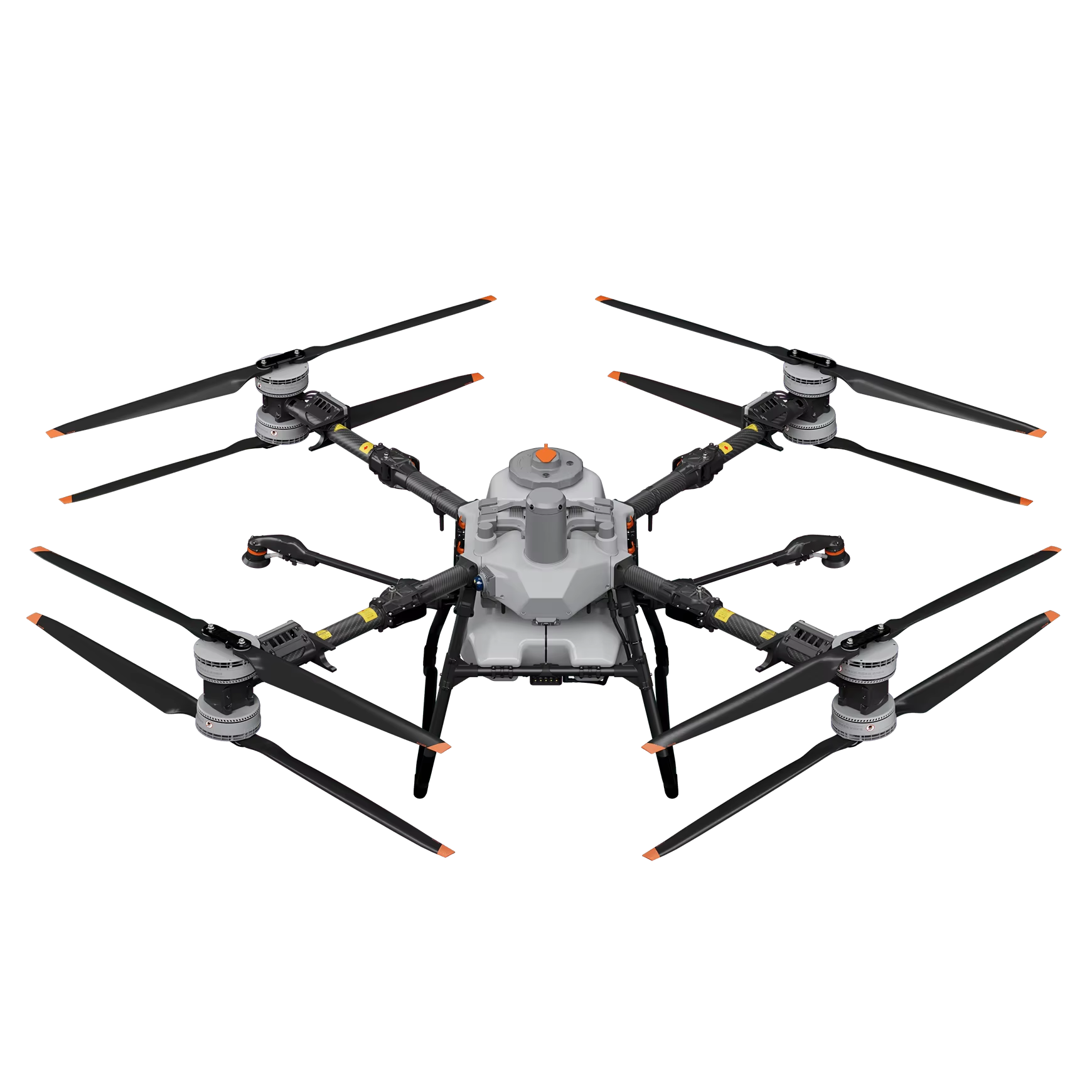
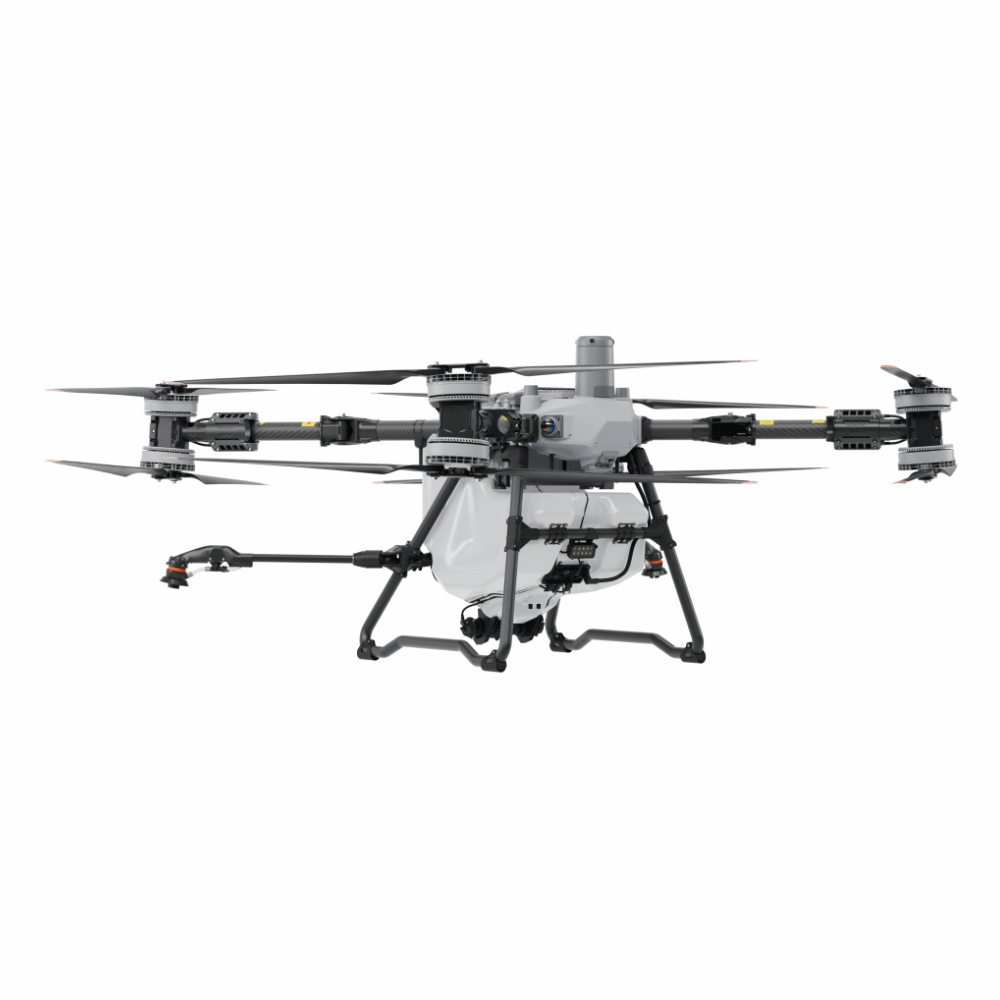
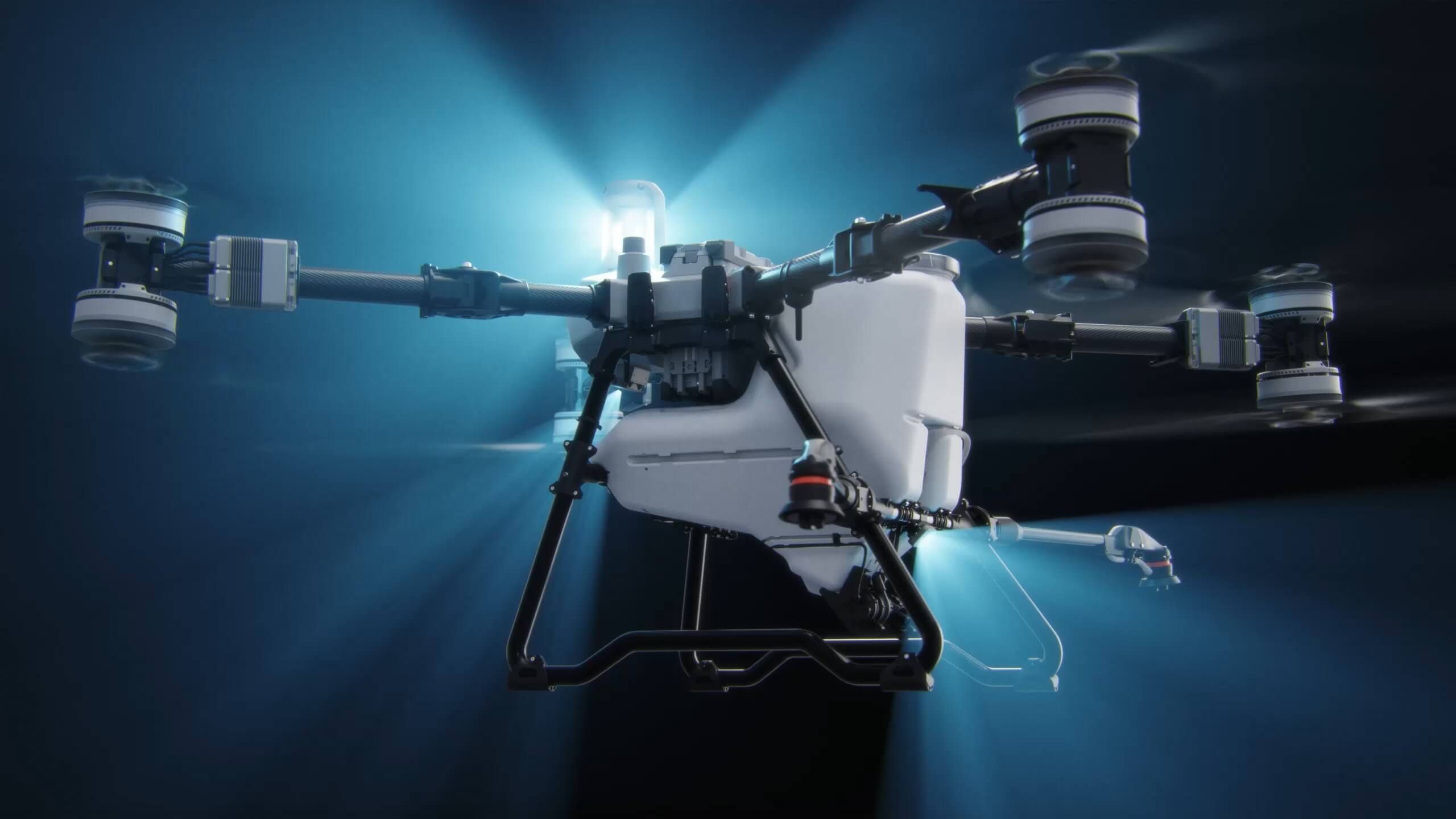
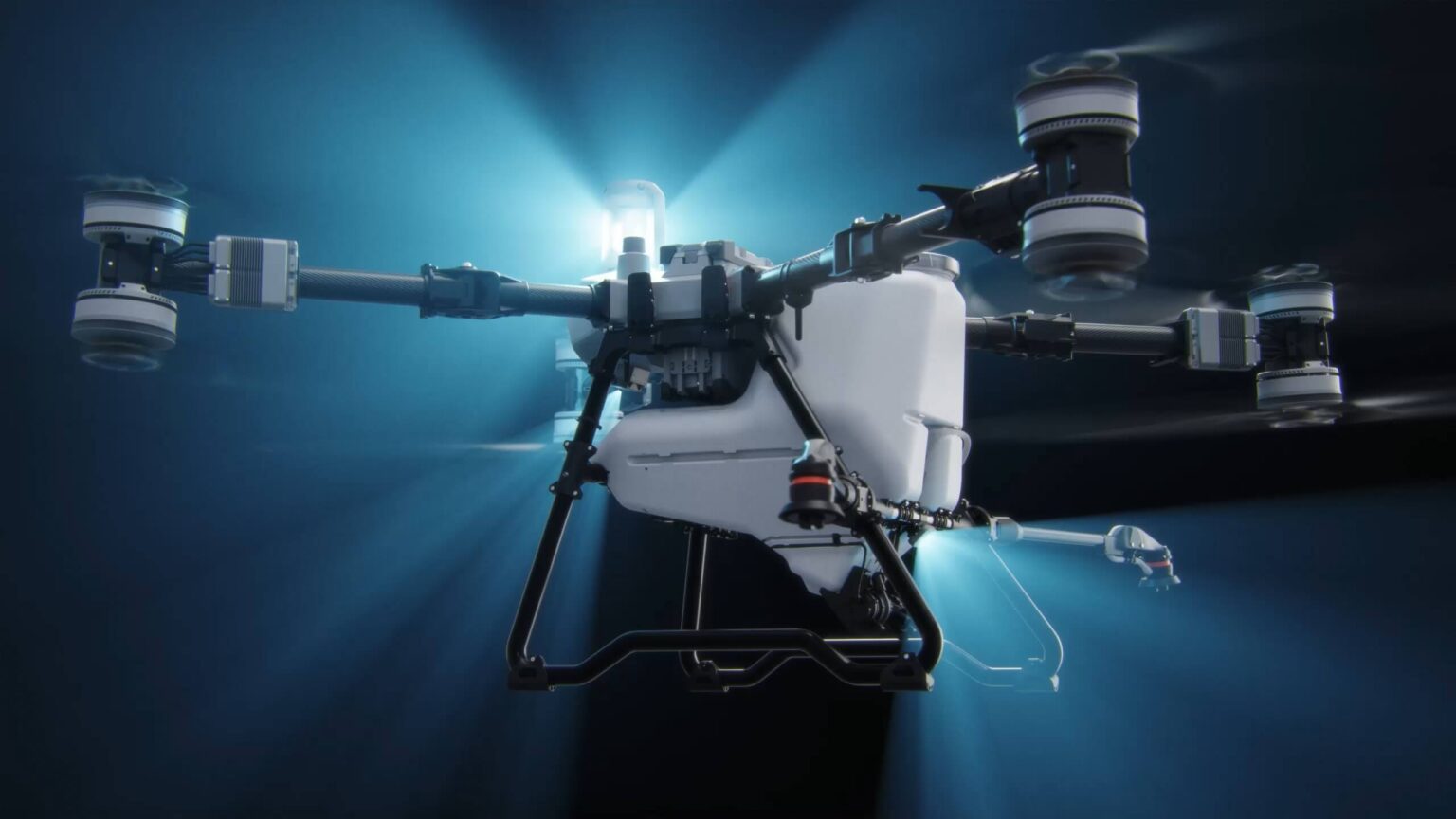
Aircraft without spraying system. The spraying system is sold separately; the spraying, spreading and lifting setups pictured below illustrate optional configurations.
The DJI Agras T100 is built for farms and contractors that need to move substantial volumes of liquid or granular material across large areas. Its modular platform supports spraying, spreading and lifting, allowing the aircraft to serve different jobs when fitted with the appropriate application system. Large capacity is only part of the story: route planning, terrain awareness and a coordinated battery workflow help the team keep operations organised from one field to the next.
Watch DJI Agras T100 on DJI’s YouTube channel. The film may show optional equipment or other models in the same series.
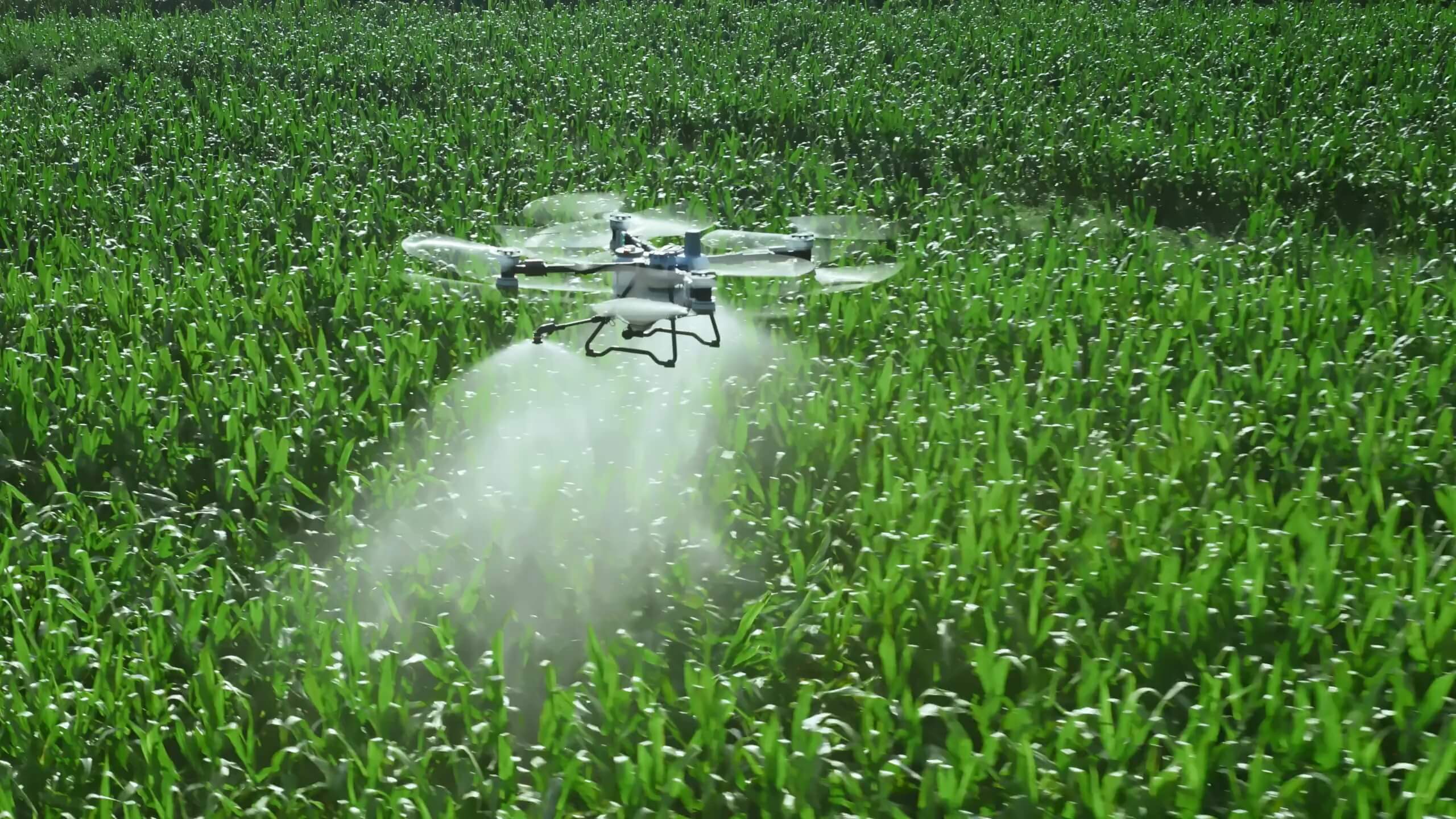
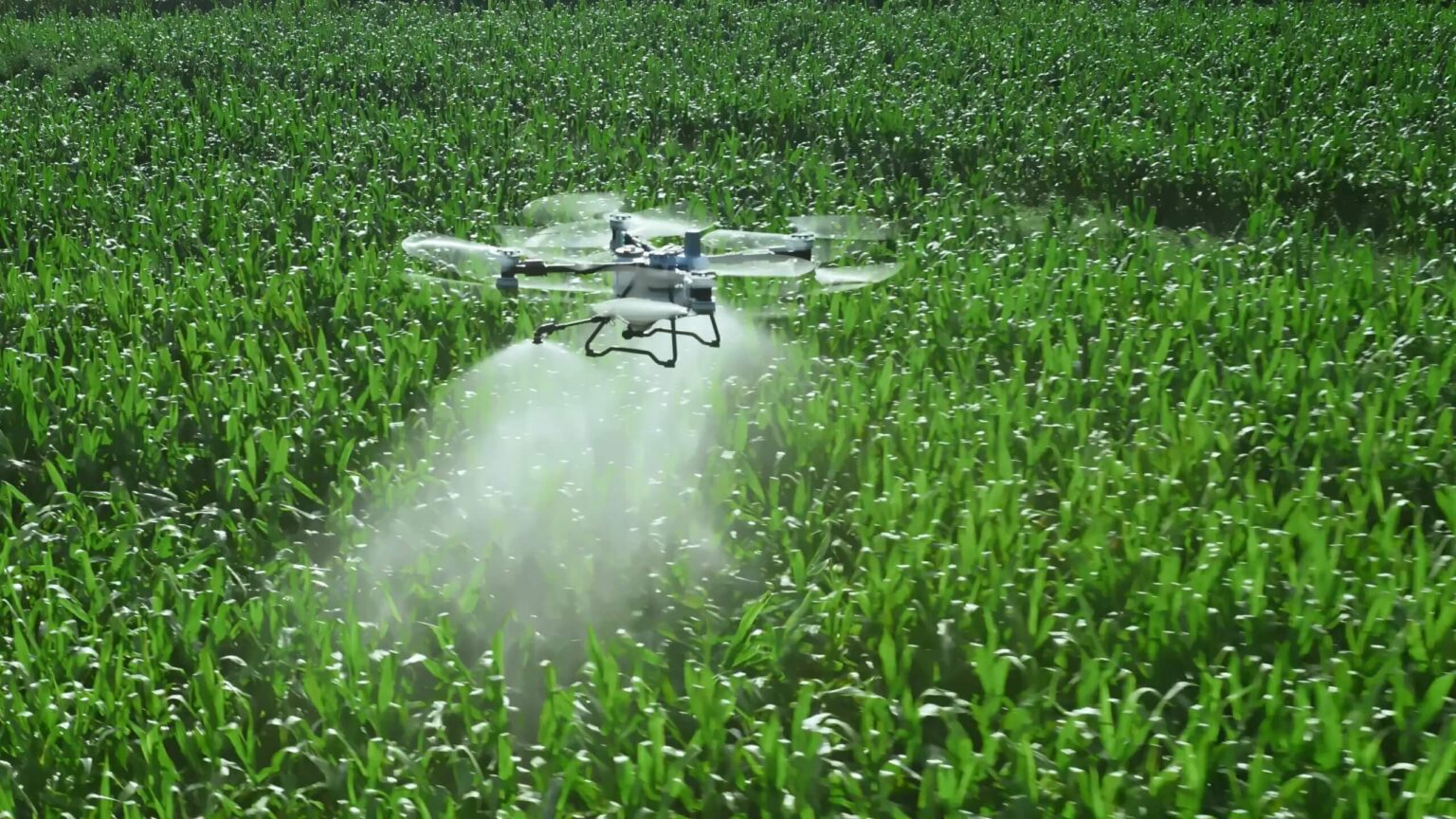
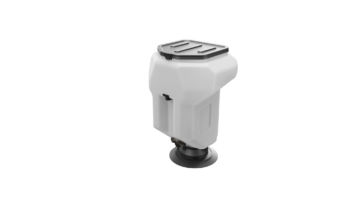
With the compatible spraying system installed, the T100 carries up to 100 litres. The standard two-sprinkler arrangement delivers up to 30 L/min, while an optional four-sprinkler configuration reaches up to 40 L/min. Adjustable atomisation helps the operator match droplet size to the application. The benefit is flexibility across crop stages and treatment volumes, rather than one fixed setup for every field. Actual coverage depends on application rate, speed, crop canopy and weather.
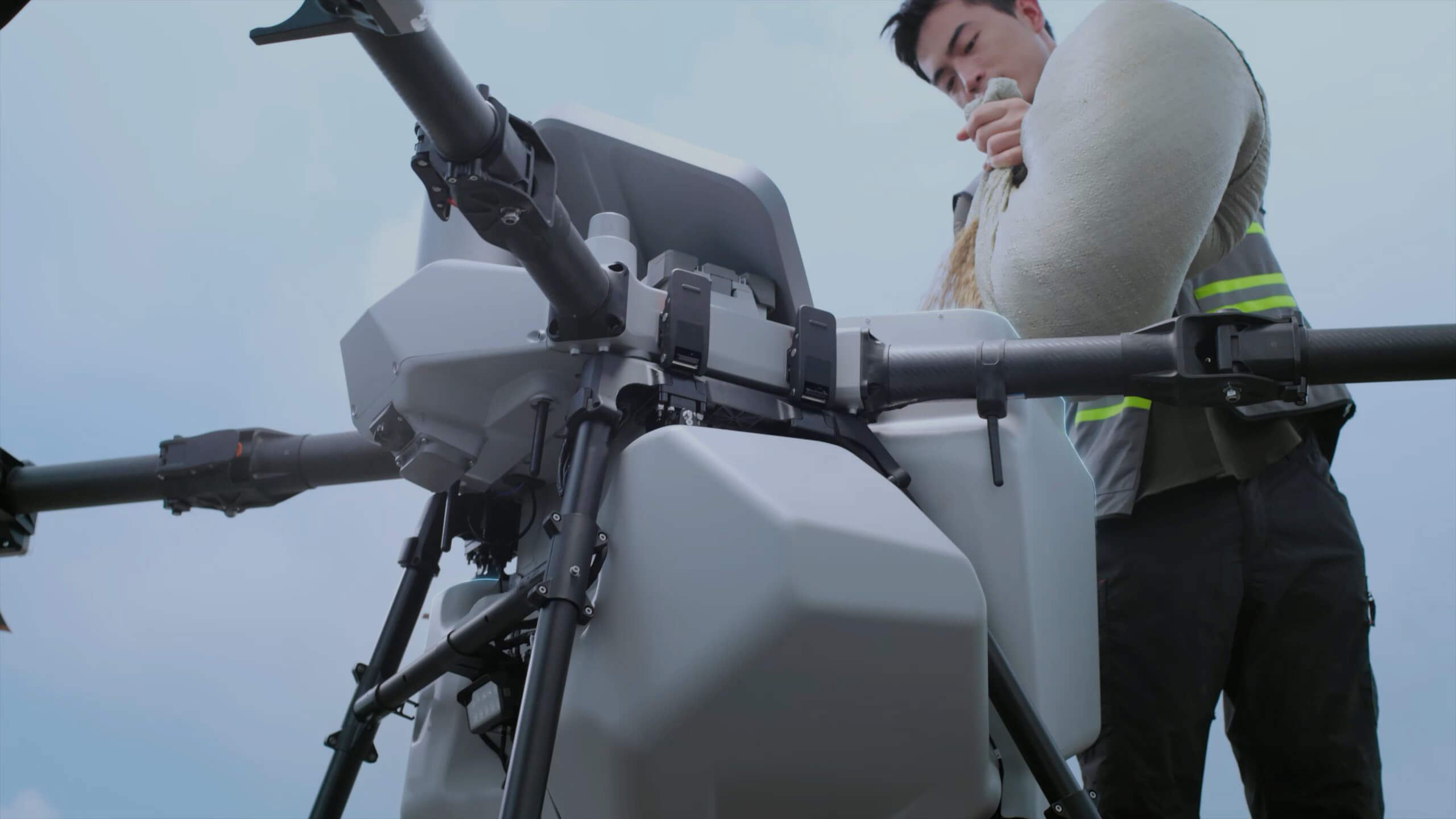
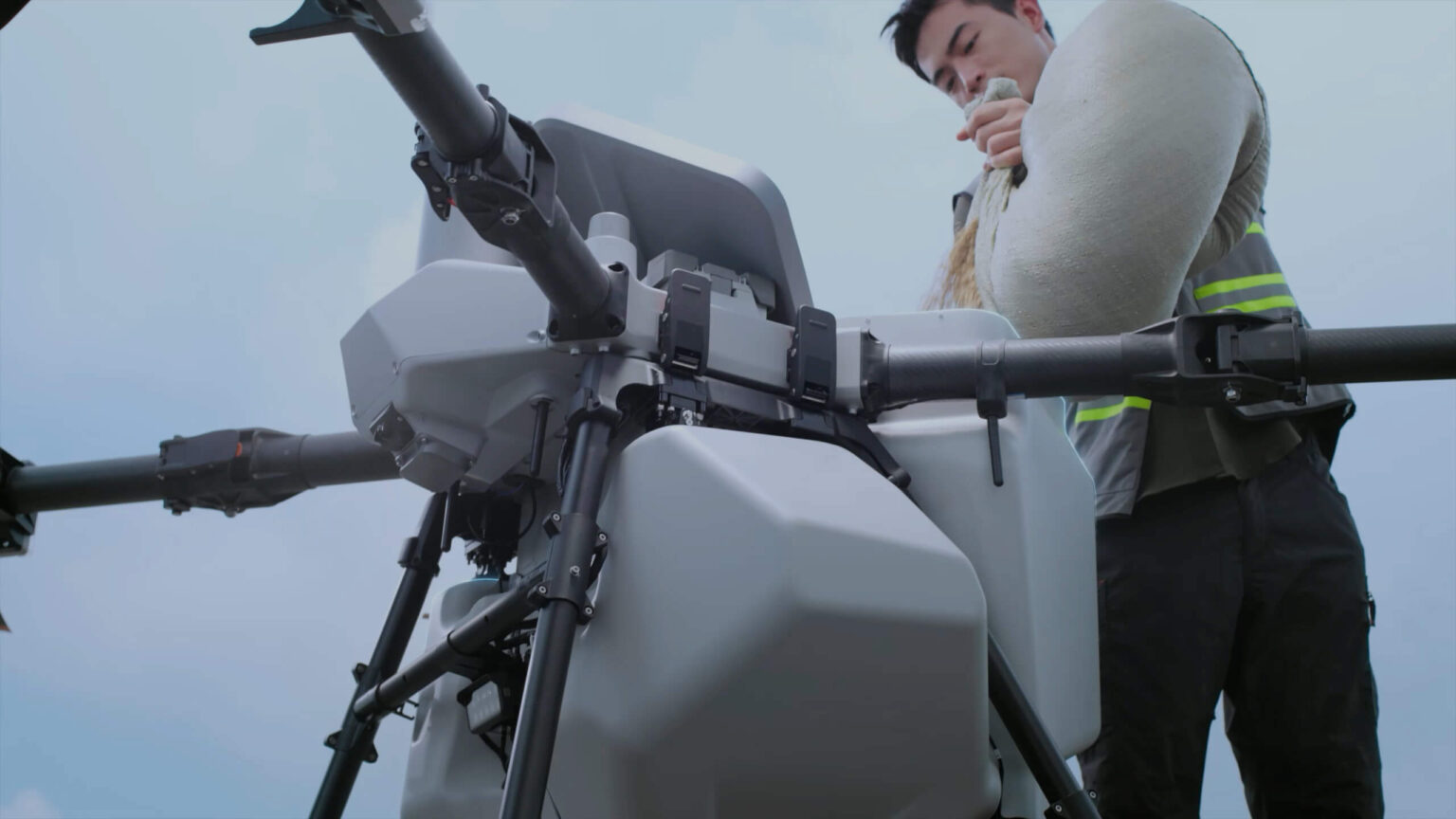
The separately sold spreading system combines a 150-litre tank with a screw feeder and centrifugal disc. It supports up to 100 kg of material, subject to material density and aircraft limits. Choosing a feeder for the granule size and required application rate matters as much as tank volume. A separate lifting system can support agricultural transport; DJI specifies up to 100 kg in the supported single-battery configuration and 80 kg for the dual-battery lifting configuration.
LiDAR, millimetre-wave radar and a penta-vision system help the aircraft sense its surroundings. The controller can display environmental information to support route assessment and obstacle awareness. These tools are especially useful around field boundaries and mixed terrain, but they do not remove the need to inspect the site, identify wires and manage clearances. Performance depends on the environment, sensor condition and operating settings.
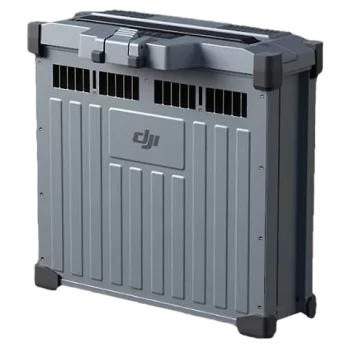
Field planning and automatic routes help organise repeatable applications. For a productive working day, consider refill access, clean water, mixing, battery rotation and the charging power source together. The DB2160 battery, compatible power supply or generator, and the required cooling equipment should be selected as a coordinated system. Agronomic application settings and refill logistics determine real productivity; maximum tank size alone does not define hectares per hour.
| Spraying capacity | 100 L / up to 100 kg with compatible spraying system |
|---|---|
| Spray flow | Up to 30 L/min standard; 40 L/min with optional four sprinklers |
| Droplet adjustment | 50–500 μm, according to nozzle configuration |
| Optional spreader | 150 L; up to 100 kg |
| Maximum spreading discharge | 400 kg/min in DJI compound-fertiliser test conditions |
| Optional lifting | Up to 100 kg single-battery; 80 kg dual-battery configuration |
| Sensing | LiDAR, millimetre-wave radar and penta-vision |
| Battery in this catalogue | DJI DB2160 |
* Maximum performance figures are measured in DJI’s specified test conditions. Actual endurance, payload and application results depend on configuration, terrain, weather and operating settings.
The spraying, spreading and lifting capacities describe different configurations, not equipment that is automatically included together. The spreading system, lifting system, mist-nozzle package, batteries and charging equipment must be checked against the selected quotation. Images and the launch video show optional configurations. Payload limits depend on operating conditions and the relevant aircraft configuration.
Aircraft without spraying system. The spraying system is sold separately; the spraying, spreading and lifting setups pictured below illustrate optional configurations.
Explore the manufacturer’s product overview, full specifications and manuals and downloads.
For arable farms treating substantial blocks, the large spray tank can reduce the frequency of refilling compared with a smaller-capacity platform. Plan the route, dose and refill point around the actual field layout to keep the aircraft and ground team working efficiently.
A contractor can build repeatable field plans and organise a support vehicle around water, mixing and battery rotation. The T100 is particularly relevant when daily workload justifies the larger transport and ground-support setup.
With the optional spreading system, the same aircraft can support suitable granular applications. Match the feeder and settings to the material, then verify the distribution pattern before treating the full area.
A compatible lifting system can move suitable loads to locations that are difficult to reach by vehicle. Plan load attachment, lifting clearances and a controlled loading area; this is a separate configuration from crop spraying.
You must be logged in to post a review.
Reviews
There are no reviews yet.